Higher education admissions
Configure requirements, screen applicants, build merit lists and matriculate the right entry level.
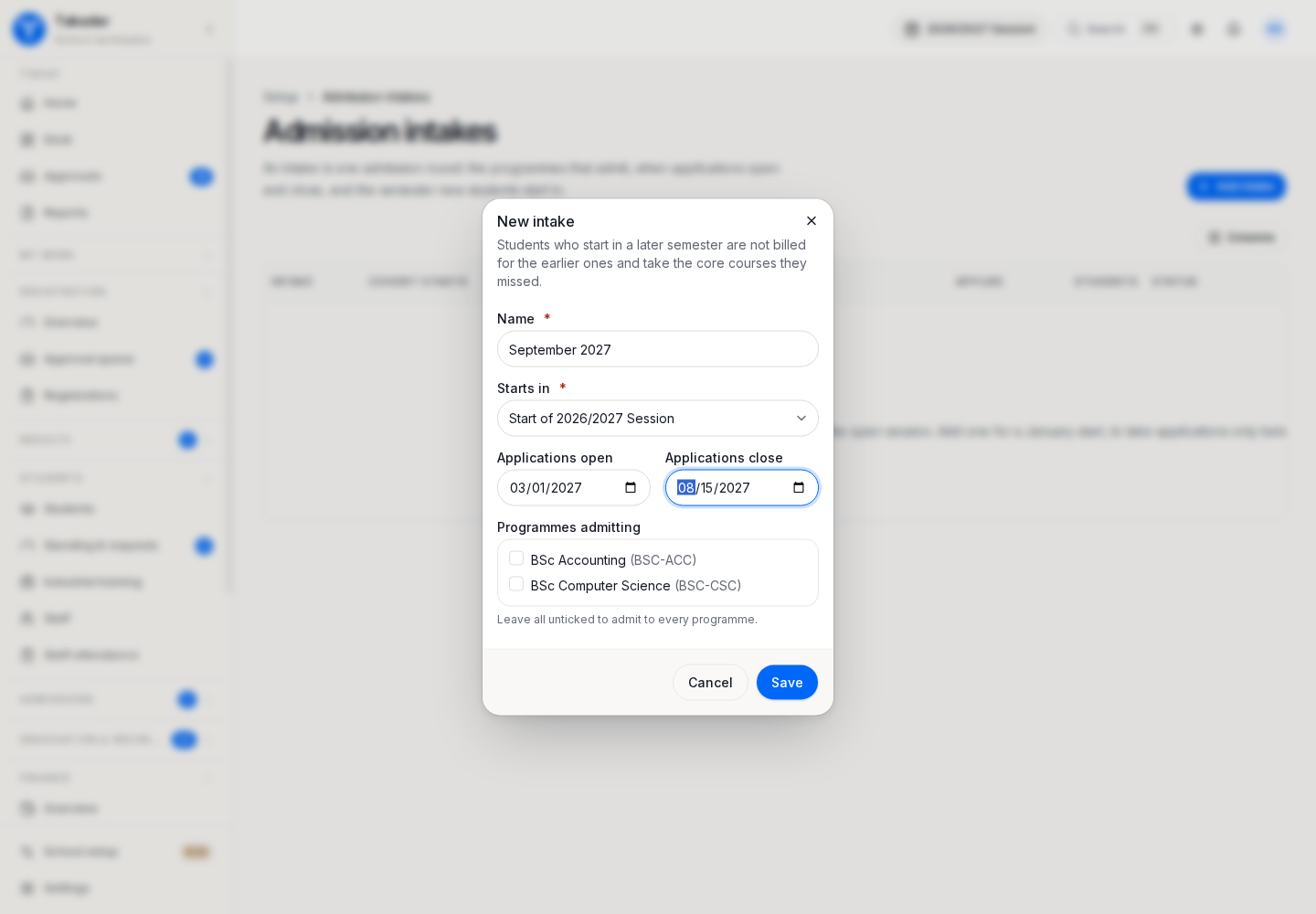
Start at Higher education → Admissions (/higher-ed/admissions). Prepare programme requirements and intakes before generating a merit list. Requirements configuration and applicant decisions are separate responsibilities.
Define the entry route
For Nigerian admissions, supported entry modes include UTME, Direct Entry and transfer. The programme’s requirements describe accepted qualifications, entry level, screening method and applicable rules. Direct Entry credentials can raise the application’s entry level to the configured requirement. Transfer admission considers the incoming CGPA on the receiving programme’s scale.
Set application and acceptance fees in admission settings, including supported programme or pathway overrides. Confirm country-specific behavior using regional admissions.
Screen and rank
- Open the applicant record and check qualifications and supporting documents.
- Record the applicable screening result. Score imports attach to existing applications; a document-screened programme does not accept a numeric screening score through that path.
- Read the structured eligibility findings. Resolve each failed requirement instead of assuming a low rank means eligible.
- Generate the merit list for the intended programme, entry mode and intake.
- Review rankings and available places, then perform the offer actions.
Ineligible applicants are excluded from merit ranking. Intake quotas account for places already held; a later list does not simply offer the full quota again. Aggregates normalize their components before applying the configured weights.
Complete the offer and matriculation
Follow acceptance and any required fee and external-status steps. At matriculation, verify the programme level and session. If no level is explicitly selected, the application’s entry level determines the default placement.
The student retains their entry mode and level. Required deficiency courses can be attached. A transfer can open the external credit-mapping workflow; admitting the candidate does not itself recognize every previous course.
Only an accepted place can be deferred through the admissions deferral action. Its application and acceptance payment records stay with the application; taking up the deferred place resumes the accepted state in the later session. Check the new cohort and placement at matriculation rather than carrying the old class forward.
Keep external steps explicit
CAPS support is a mapped export, status tracking and status import for Nigerian institutions. It is an administrative hand-off to JAMB, not a live CAPS API. Do not promise that a Takadar offer completes the external authority’s decision.
In the demonstration application
These captures use synthetic seeded records. Select an image for the full-size view.